
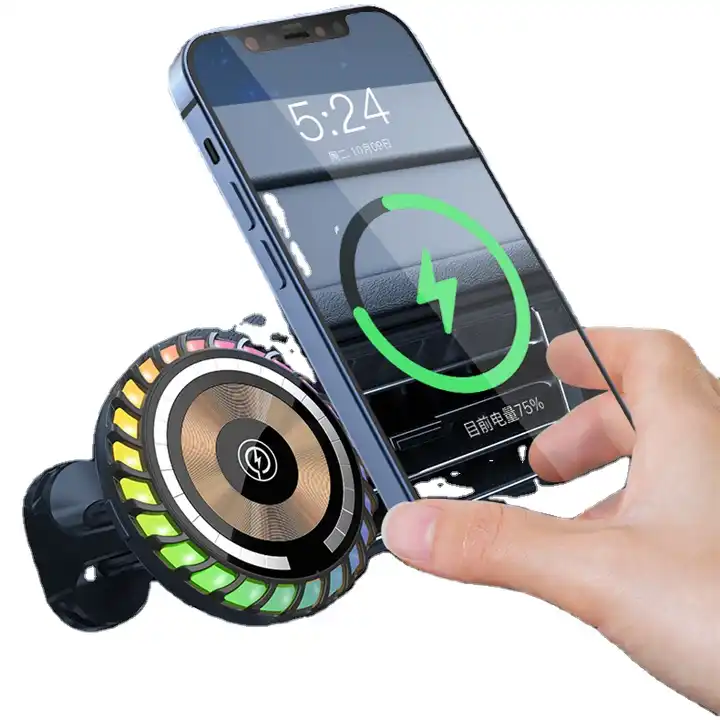
A car charger used to be a simple utility product. Plug it in, connect a cable, and charge the phone. That approach no longer matches how people use their vehicles today.
Modern drivers rely on smartphones for navigation, calls, music streaming, mobile payments, and real-time communication throughout the day. As a result, charging accessories have become part of the overall driving experience rather than just a backup power tool.
At the same time, users are growing tired of messy cables, unstable phone mounts, and chargers that overheat during long drives. Large flagship phones have also exposed the weakness of traditional dashboard holders, especially on uneven roads or during sudden braking.
These changes are reshaping the market for magnetic wireless charging products. Instead of focusing only on charging speed, brands now pay closer attention to overall car charger design, including magnetic stability, thermal control, rotation flexibility, and compatibility with modern smartphone ecosystems.
For companies developing automotive accessories, understanding these design priorities is becoming increasingly important as consumers expect cleaner dashboards, easier operation, and more reliable wireless charging performance.
Why Magnetic Wireless Charging Continues to Grow
Wireless charging has gradually moved from a premium feature to an everyday expectation. The rise of magnetic charging systems has accelerated this shift even further.
Unlike standard wireless chargers, magnetic systems help align the phone directly with the charging coil. Better alignment improves charging consistency while reducing interruptions caused by vibration or movement inside the vehicle.
For drivers, the difference feels practical immediately.
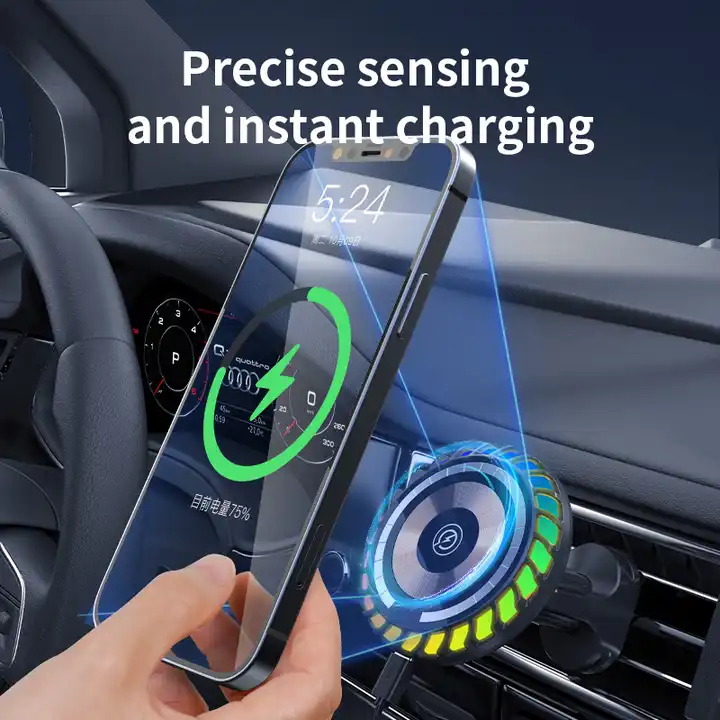
Instead of plugging in cables every time they enter the car, users can place the phone onto the mount with one hand and start charging instantly. This convenience becomes especially useful during commuting, rideshare driving, delivery work, or long-distance travel.
Demand for products such as the 15W magnetic wireless car charger holder and 360 rotate wireless car charger mount has grown quickly because these devices combine charging and mounting into one compact solution.
Core Design Priorities Behind Modern Wireless Car Chargers
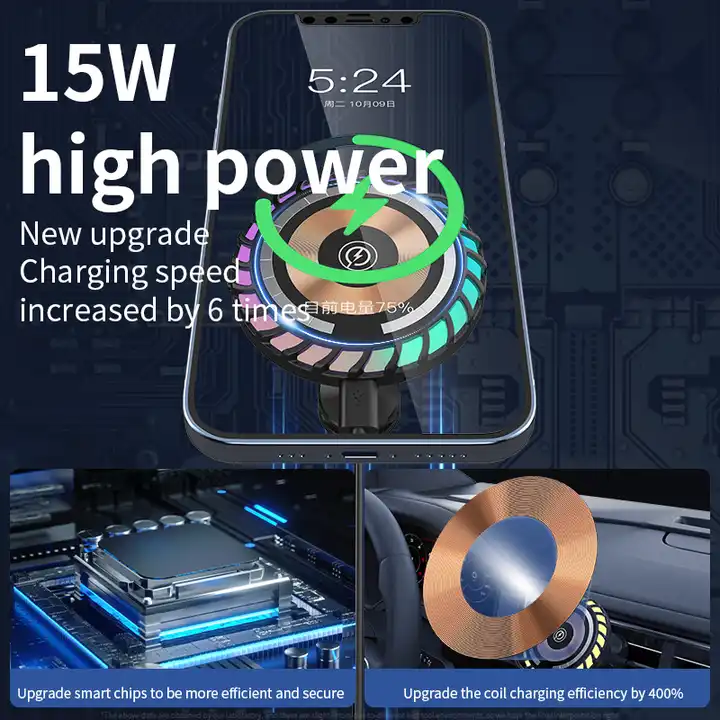
Stable 15W Wireless Charging Performance
Charging speed remains one of the biggest factors influencing buying decisions.
However, maintaining stable 15W wireless charging inside a vehicle is more difficult than many consumers realize. Cabin temperatures rise quickly during summer driving, especially under direct sunlight. Without proper thermal management, chargers may slow down automatically or stop charging altogether.
That is why premium products now focus heavily on heat control.
Modern wireless car fast charger systems often include:
- Intelligent power management
- Aluminum alloy heat dissipation
- Optimized charging coils
- Smart temperature monitoring
- Stable charging output during navigation use
Good thermal management not only protects charging efficiency but also helps reduce long-term battery stress for smartphones.
Strong Magnetic Alignment for Daily Driving
Weak magnetic force is one of the most common complaints in low-cost car chargers.
Phones may slide, rotate, or detach completely when driving over potholes, rough roads, or speed bumps. Larger devices also place more pressure on magnetic structures.
As a result, magnetic performance has become a major part of modern car charger design.
Many premium chargers now use high-strength magnetic arrays designed to improve both holding force and charging alignment. Proper magnetic positioning helps create:
- More stable attachment
- Better charging efficiency
- Easier one-hand placement
- Reduced movement during driving
For users relying on navigation throughout the day, stable magnetic support directly improves convenience and safety.
Flexible 360-Degree Viewing Angles
Drivers use their phones differently depending on the vehicle, dashboard layout, and driving habits.
Some prefer portrait mode for calls and notifications, while others switch to landscape mode for navigation. Fixed-angle mounts often create visibility problems or uncomfortable viewing positions.
That is why adjustable viewing systems have become standard in newer products.
A high-quality 360 rotate wireless car charger mount allows drivers to:
- Change viewing angles quickly
- Reduce screen glare
- Improve navigation visibility
- Maintain easier access while driving
Smooth rotation systems also create a more premium user experience compared with stiff mechanical holders.
Cleaner Styling and Ambient Lighting
Automotive accessories are becoming more design-focused than before.
Consumers increasingly prefer products that blend naturally into vehicle interiors instead of looking bulky or overly industrial. Slim charging profiles, matte finishes, and subtle LED lighting now influence purchasing decisions almost as much as charging performance.
Soft ambient lighting serves a practical purpose as well. It helps drivers position devices more easily in low-light conditions without becoming visually distracting.
For many brands, combining minimal industrial styling with practical functionality is now essential for standing out in the crowded wireless charging market.
Why Manufacturing Quality Matters in Car Charger Products
Vehicle environments place continuous stress on charging accessories.
Unlike home electronics, automotive products must handle:
- Constant vibration
- Temperature fluctuations
- Long charging cycles
- Sudden movement
- Daily physical handling
Poor manufacturing quality often leads to overheating, weak magnetic performance, unstable charging, or short product lifespan.
That is why production experience matters just as much as product design.
Trangjan brings more than 19 years of manufacturing experience in charging accessories, wireless chargers, and consumer electronics. The company operates four production facilities across Dongguan, Shaoguan, Vietnam, and Thailand, supported by over 400 employees and advanced testing infrastructure.
Its quality control systems include:
- Environmental testing equipment
- Automatic cable production lines
- Precision cable testing machines
- Tensile and swing testing systems
- Full product inspection procedures
Trangjan also maintains ISO9001 and ISO14001 certifications, helping ensure stable quality consistency across large-scale production.
Future Trends in Smart In-Car Charging
Wireless charging accessories are continuing to evolve alongside connected vehicle technology.
Future products will likely focus on:
- Smarter power management
- Faster magnetic alignment
- Multi-device charging
- Cleaner dashboard integration
- Stronger compatibility with mobile ecosystems
Consumers increasingly want accessories that feel integrated into the driving experience rather than added onto the dashboard as separate gadgets.
As smartphones, vehicles, and connected devices become more closely linked, demand for compact and intelligent charging systems will continue growing across the automotive accessory market.
Conclusion
Modern wireless charging products are no longer simple utility accessories. They combine charging performance, magnetic stability, industrial design, and everyday usability into a single connected experience.
For brands entering this market, reliable car charger design plays a major role in long-term product success. Stable charging performance, strong magnetic alignment, effective heat management, and durable manufacturing standards all directly affect user satisfaction.
With experience in wireless charging technology, precision manufacturing, and large-scale production, Trangjan supports the development of magnetic wireless charging products designed for modern driving environments and evolving mobile lifestyles.