
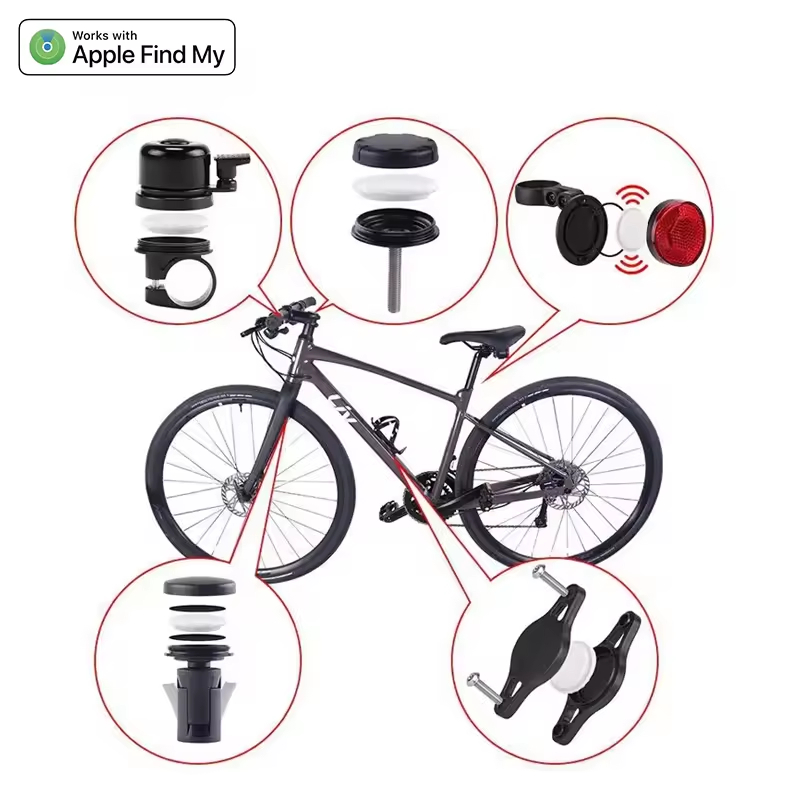
A reliable locator helps you find your bicycle when you park it outside a shop, leave it at a train station, or store it in a shared cycling area. For retailers, bicycle accessory brands, and distributors, choosing the right device also means balancing tracking performance, installation, compatibility, and product cost. A well-designed smart tracker can combine anti-loss functionality with a familiar bicycle accessory, giving customers a practical solution without requiring a separate tracking device.
Trangjan manufactures electronic accessories, cables, chargers, and tracking products, drawing on more than 20 years of industry experience. Its product development capabilities and experience with Apple Find My, Google Find Hub, and Samsung SmartThings-compatible tracking solutions provide a relevant foundation for brands evaluating connected anti-loss products. Understanding how a bicycle locator works and which specifications matter will help you make a more informed sourcing decision.
What Is a Bicycle Locator and How Does It Work?
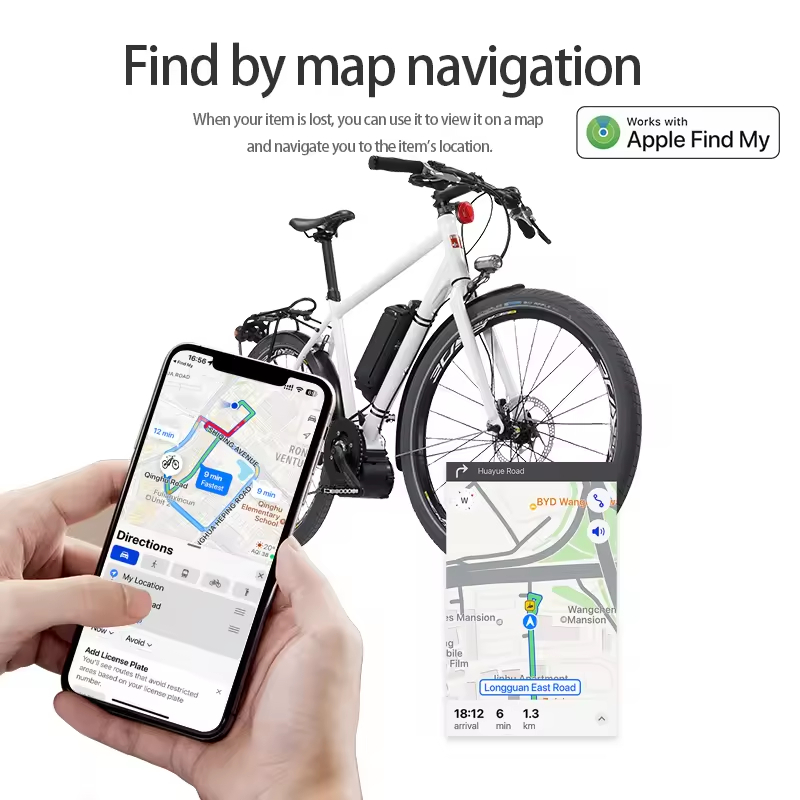
A bicycle locator is a compact tracking device designed to help users locate a bicycle or another valuable item. Depending on its technology, it may use Bluetooth communication and a compatible device-finding network to report the item’s location.
Unlike a dedicated GPS tracker, a Bluetooth-based locator generally relies on nearby compatible devices or a supported finding network to update its location. Therefore, you should confirm the product’s actual positioning technology before comparing tracking range or coverage.
Common bicycle locator designs include:
- Bicycle bell locator: Integrates tracking functionality into a bicycle bell for a familiar, practical installation.
- Rear light locator: Combines a bicycle lighting accessory with an anti-loss tracking function.
- Bike-mounted smart tracker: Attaches to the bicycle frame or another suitable mounting point.
- Find My-compatible locator: Uses a supported device-finding ecosystem, subject to compatibility and certification requirements.
The bicycle bell and rear light formats can appeal to customers who prefer integrated accessories instead of carrying a separate tracking tag.
Key Features to Evaluate in a Smart Tracker
When sourcing a bicycle locator, consider the following features before placing a wholesale or OEM order.
1. Tracking Technology and Compatibility
Confirm whether the device uses Bluetooth, a dedicated GPS module, or another positioning method. Check which smartphones, applications, and finding networks it supports.
For products marketed as Apple Find My-compatible, verify the applicable authorization and certification status. Similarly, Google Find Hub and Samsung SmartThings compatibility should be confirmed for the specific product rather than assumed from general manufacturer capabilities.
2. Installation and Everyday Usability
A bicycle locator should fit its intended mounting position without interfering with normal riding. Evaluate the mounting mechanism, resistance to loosening, accessibility for maintenance, and ease of installation.
For bell-style and rear-light designs, also check the accessory’s primary function. A tracking feature should complement the bicycle accessory rather than compromise its intended use.
3. Battery and Environmental Protection
Battery life depends on battery capacity, transmission frequency, operating conditions, and device design. Ask the supplier for tested battery-life data and the recommended replacement or charging procedure.
For outdoor cycling, request documented water-resistance and durability test results. Do not assume that a bicycle-mounted locator is waterproof simply because it is designed for outdoor use.
4. Customization and Manufacturing Support
If you are developing a private-label product, assess whether the manufacturer can support industrial design, tooling, electronic integration, packaging, quality testing, and production planning.
Trangjan reports an 8,000-square-meter production area, more than 400 employees, and over 30 customer service staff. Its ISO 9001 quality management and ISO 14001 environmental management certifications provide useful starting points when evaluating its manufacturing and supplier-management processes.
Bicycle Locator vs. Standalone Smart Tracker
The best choice depends on how your customers use their bicycles and which features your product must deliver.
| Evaluation factor | Integrated bicycle locator | Standalone smart tracker |
|---|---|---|
| Installation | Designed for a bell, light, or mounting point | Usually requires a separate attachment |
| Accessory integration | Combines tracking with another bicycle accessory | Primarily provides tracking |
| Appearance | Can blend into the bicycle setup | May be more visible |
| Compatibility | Depends on the built-in tracking technology | Depends on the selected tracker and network |
| Maintenance | Depends on the integrated design | Depends on the individual device |
| Customization | May offer accessory-specific design options | May offer more flexible placement |
Neither design is universally better. Compare actual dimensions, tracking performance, battery specifications, compatibility, and total sourcing costs before selecting a model.
How to Source a Custom Bicycle Locator
Follow these steps to evaluate a bicycle locator supplier and reduce uncertainty during product development.
- Define your target market. Identify your customers, sales channels, target price, and intended use cases, such as commuter cycling, recreational riding, or bicycle retail accessories.
- Specify the tracking ecosystem. Decide whether your product requires Apple Find My, Google Find Hub, Samsung SmartThings, or another supported system. Ask for evidence of product-specific compatibility and approvals.
- Confirm the hardware requirements. Document the mounting design, dimensions, battery requirements, environmental protection, and any integrated bell or rear-light functions.
- Request samples and test results. Evaluate installation, location updates, connectivity, battery performance, and durability under representative conditions. Review relevant reports rather than relying solely on marketing claims.
- Review OEM/ODM capabilities. Discuss design changes, branding, packaging, minimum order quantities, production lead times, quality inspection, and after-sales support with the manufacturer.
- Approve a production specification. Finalize the approved sample, test criteria, labeling, packaging, and delivery requirements before authorizing mass production.
FAQ
1. Does a bicycle locator require GPS?
Not necessarily. Many compact anti-loss locators use Bluetooth and a compatible device-finding network instead of an independent GPS receiver. Check the specific model’s technical specifications to understand its location-reporting capabilities.
2. Can a bicycle locator work worldwide?
Global locating depends on the supported finding network, regional availability, compatible devices nearby, connectivity, and local restrictions. Before marketing a product for worldwide use, verify its supported countries and actual operating requirements.
3. Can Trangjan support custom smart tracker projects?
Trangjan has experience manufacturing electronic accessories and tracking products, alongside its broader cable and charging accessory portfolio. Contact its team to discuss the proposed bicycle locator, required tracking ecosystem, customization scope, order volume, and product-specific testing requirements.
Conclusion
Choosing the right locator requires more than comparing product prices. You should evaluate tracking technology, compatibility, installation, battery performance, environmental protection, and manufacturing support together. A thoughtfully designed smart tracker can help bicycle accessory brands address anti-loss needs while offering a more integrated user experience.
For businesses developing bicycle bells, rear-light tracking products, or other connected accessories, Trangjan’s manufacturing experience and tracking technology background provide a starting point for supplier evaluation. Confirm the specifications and compliance requirements of the exact model before moving into production.
CTA
Planning to launch a bicycle locator under your own brand? Contact Trangjan to discuss your target market, preferred tracking ecosystem, product customization requirements, sample evaluation, and OEM/ODM manufacturing options. Prepare your target specifications and expected order volume to help the team assess the project more efficiently.